Sukarno
PROCLAMATOR/FIRST PRESIDENT OF INDONESIA

1901
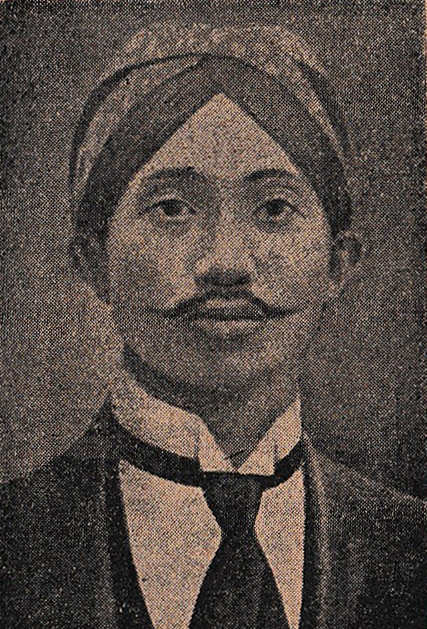
He was born on June 6, 1901 in Surabaya, East Java, and was given the name Kusno Sosrodihardjo. His father, Raden Soekemi Sosrodihardjo was an elementary school teacher, who at that time was part of the Javanese aristocracy. From his mother, Ida Ayu Nyoman Rai, who came from Buleleng, Bali, Soekarno inherited Brahmin blood. His father and mother met when Soekemi was assigned to teach in Bali, and then asked to be transferred to Java before Soekarno was born. Following Javanese customs, Kusno Sosrodihardjo's name was later changed to Soekarno because he was sickly as a child.
1916
After completing his elementary school education in Mojokerto, Sukarno continued his education at Burgerschool in Surabaya. It was in this city that he met Tjokroaminoto, a nationalist who, together with KH Samanhudi, founded the Sarekat Dagang Islam in 1911 which later changed its name to Sarekat Islam (1912). In 1920, Sukarno married Tjokroaminoto's daughter, Siti Oetari.
1926
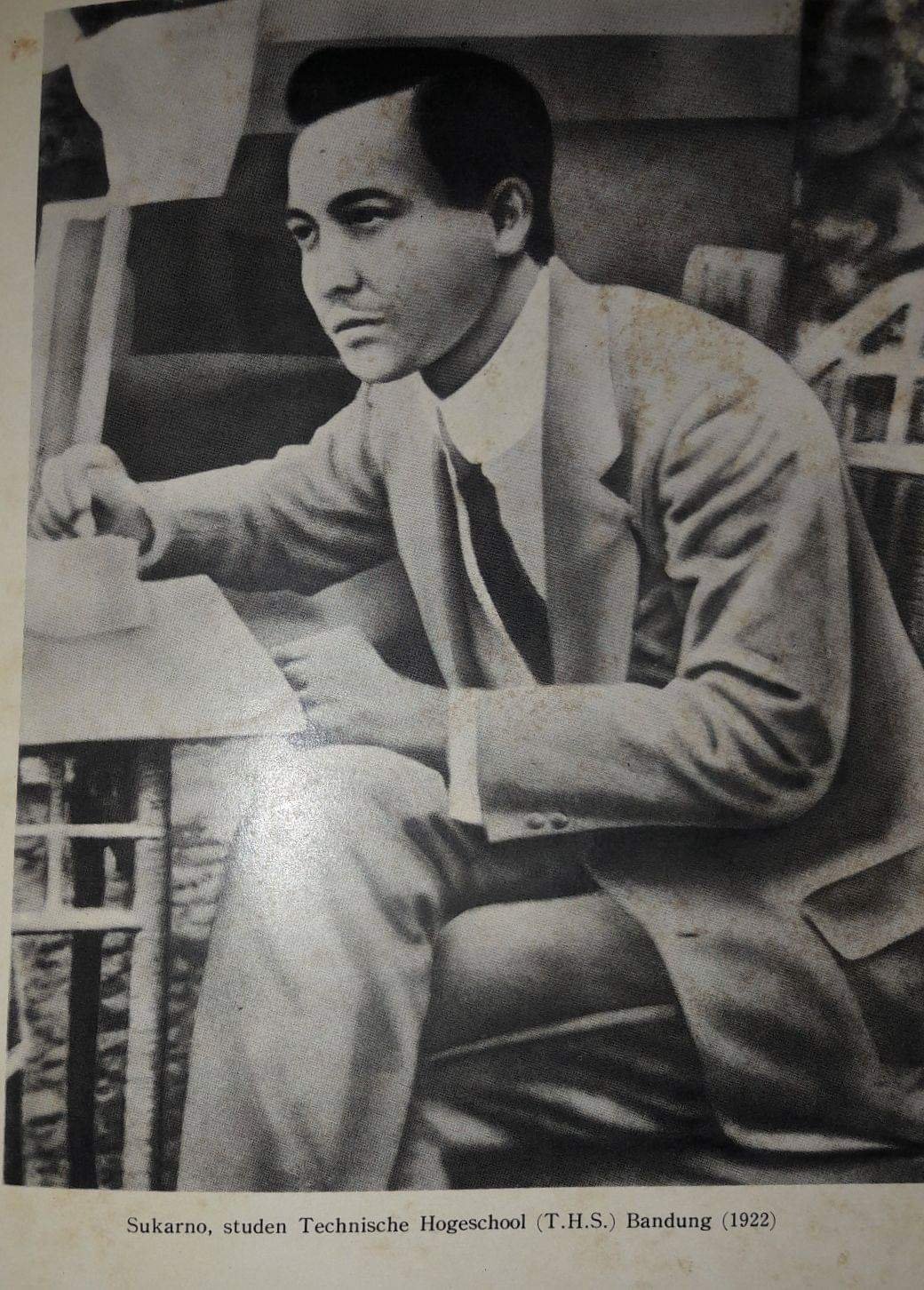
In 1921, he continued his studies at the Technische Hoogeschool de Bandoeng majoring in Civil Engineering with a specialization in Architecture. In this city he also married Inggit Ganarsih after divorcing her husband, H. Sanoesi. After graduating in 1926, Sukarno and his college friend, Anwari, founded the architectural firm Sukarno & Anwari in Bandung, which provided planning and construction services. Some of Sukarno's architectural works include the renovation of the Preanger Hotel building (1929), when he was an assistant to the famous Dutch architect, Rosper Wolff Schoemaker. Sukarno also designed several private residences on what are now Jalan Gatot Subroto, Jalan Palasari, and Jalan Dewi Sartika in Bandung.

1927
On July 4, 1927, together with his friends from the Algemeene Studieclub, Sukarno founded the Indonesian National Party (PNI), and was elected as its first chairman. Through the PNI, he echoed the spirit of Indonesian independence, and opposition to imperialism and capitalism which he considered worsened the lives of the Indonesian people. As an admirer of the Founding Father of modern Turkey, Mustafa Kemal Ataturk, Sukarno also embraced the idea of secularism. In addition, through the PNI, Sukarno began to campaign for the idea of unity and solidarity among the various ethnic groups in the Dutch East Indies. After the dissolution of the Sarekat Islam and the failure of the Indonesian Communist Party rebellion in 1926, the PNI began to attract the attention and interest of the people of the Dutch East Indies to join together in fighting for independence.

1929
The activities, speeches and meetings held by Sukarno and the PNI were always spied on by the Dutch Secret Police Service (Politieke Inlichtingen Dienst/PID), and were often broken up. On December 29, 1929, along with several other PNI leaders, Sukarno was arrested by the Dutch colonial authorities while he was visiting Yogyakarta. During the trial at the Bandung Landraad court, which took place from August to December 1930, Sukarno wrote a plea that strongly criticized colonialism and imperialism. The title of his plea has become very famous until now, Indonesia Menggoegat .
1930
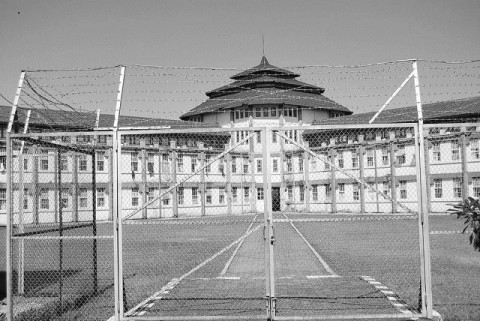
On December 22, 1930, he was sentenced to four years and thrown into Sukamiskin Prison, Bandung. But because of pressure from liberal elements both in the Netherlands and in the Dutch East Indies, due to the plea speech he wrote, Sukarno was then released on December 31, 1931 or three years before his sentence expired. His name became increasingly widely known among the Dutch East Indies community.

1932
While Sukarno was imprisoned in Sukamiskin, the PNI was disbanded by the colonial government. Its former members then formed two different political parties: the Indonesian Party (Partindo) led by Mr. Sartono, and the New Indonesian National Education Party (PNI Baru) led by Mohammad Hatta and Sutan Sjahrir who had just returned from studying in the Netherlands. Partindo prioritized mass agitation, while PNI Baru chose a long-term strategy of modern education for the Indonesian people. Sukarno tried to reconcile the two groups to form a nationalist front, and he was later elected Chairman of Partindo on July 28, 1932. Sukarno considered Hatta's strategy to ignore the fact that politics can only truly produce change through the formation and use of force (machtsvorming en machtsaanwending).
1934
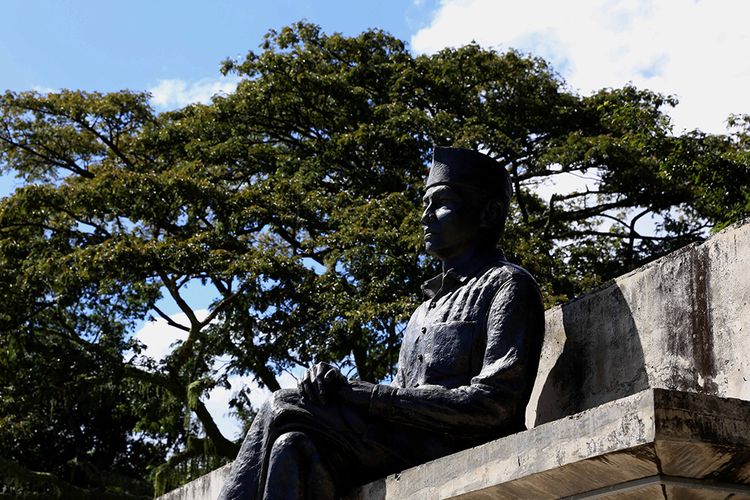
In 1934, Sukarno was exiled to a place where he could not make mass agitation speeches. This time, Governor General Jonkheer Bonifacius Cornelis de Jonge exiled Sukarno, accompanied by his family including Inggit Ganarsih, to Ende on Flores Island without trial. With limited space for movement by colonial rule, it was on this island that Sukarno spent much of his time contemplating big and important ideas, which would later help him when he formulated the basis of the state for an independent Indonesia.

1938
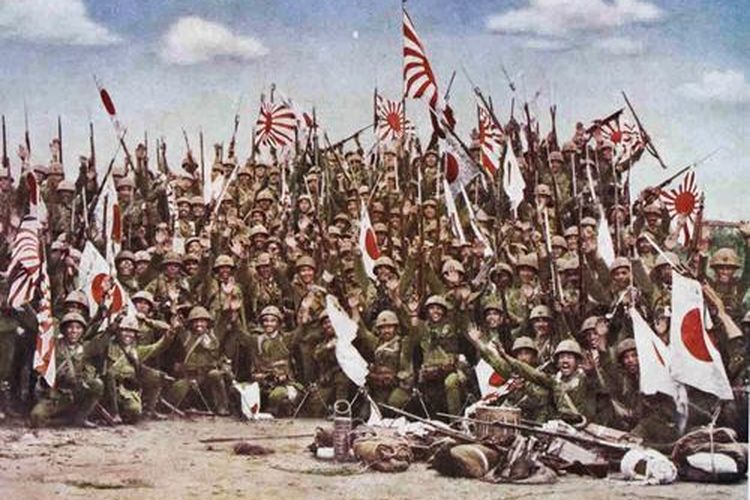
Due to a malaria outbreak in Flores, Sukarno's exile was moved by the colonial government to Bengkulu on Sumatra Island in February 1938. It was in this city that he met Fatmawati, a daughter of the Muhammadiyah Branch Chairman, Hasan Din. Later in 1943, after divorcing Inggit Ganarsih, Sukarno married Fatmawati as his wife. One of the reasons given by Sukarno for remarrying was because Inggit Ganarsih had not been able to give him children after twenty years of marriage. Sukarno was still in exile when the Japanese army began to occupy the Dutch East Indies in 1942.
1942
In July 1942, Sukarno was returned to Jakarta by the Japanese army, after previously, in February 1942, he was transported by truck from Bengkulu to Padang, West Sumatra, by the colonial government with the intention of being sent to Australia. This plan was canceled because the Dutch had to save themselves when Dai Nippon troops began to advance into Padang. Upon his return to Jakarta he met with other nationalist figures who had also recently been released by the Japanese.

1943
In March 1943, the Japanese occupation government formed POETRA (Poesat Tenaga Rakyat) under the leadership of Soekarno, Hatta, Ki Hadjar Dewantara, and KH Mas Mansjoer. The goal was to rally popular support in recruiting romusha workers and to stir up pro-Japanese and anti-Western sentiments among the people of the Dutch East Indies. Soekarno's famous agitation read, "We iron America, we crowbar England', to raise resistance against the power of the allied forces. Soekarno believed that Indonesian independence could be achieved by utilizing the support of the Japanese army.
1945
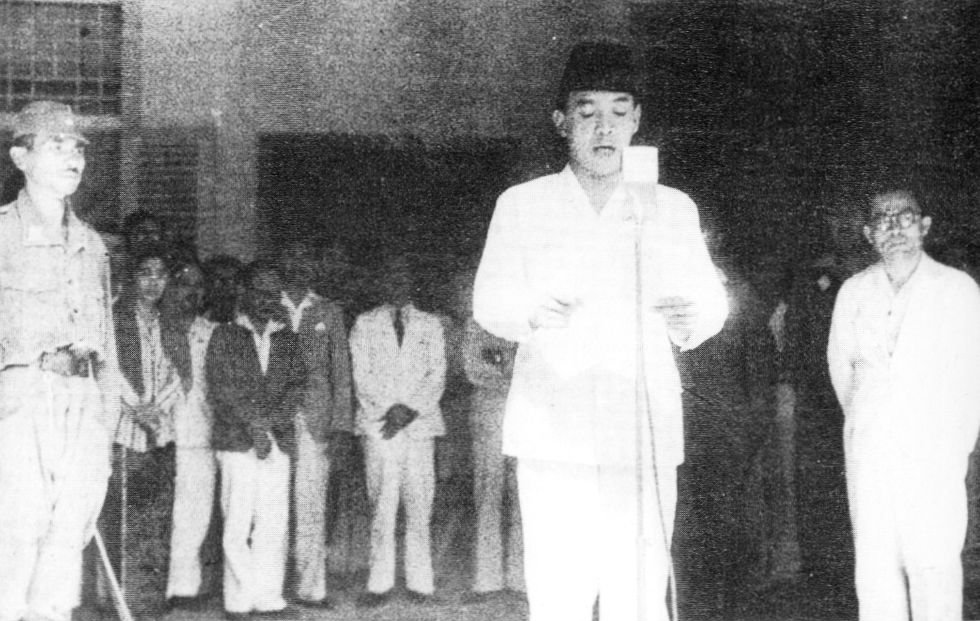
August 17, 1945, accompanied by Mohammad Hatta, in a declining health condition, Soekarno read the text of the Proclamation of Indonesian Independence on the front porch of his house on Jl. Pegangsaan Timur, Jakarta. Since then the Dutch East Indies became an independent country with the name Indonesia.

1947
Not even two years after Indonesia's independence, the Netherlands launched an attack, later called Military Aggression I, on the islands of Java and Sumatra. The trigger was the lack of understanding between the Netherlands and Indonesia, even though the Linggarjati Agreement had been agreed upon by both. The Dutch aggression only stopped, albeit temporarily, after the international community intervened to overcome it.
1948
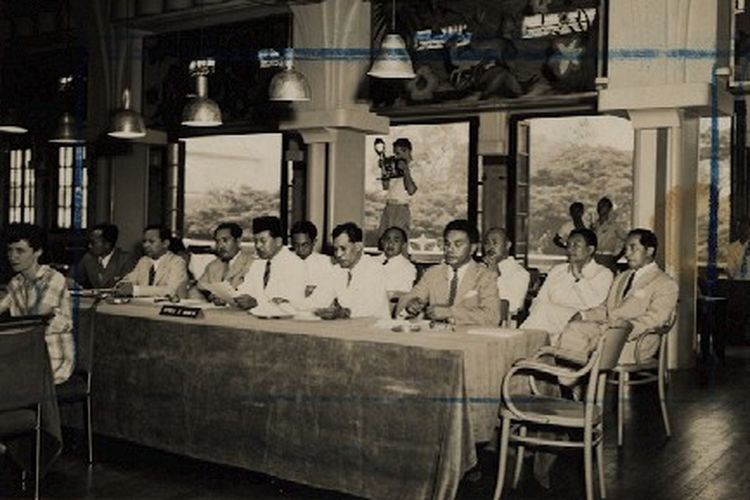
In 1948, the Dutch again carried out military aggression in Java and Sumatra, including an attack on Yogyakarta, the capital of Indonesia. The Renville Agreement, negotiations carried out by the international community between the Netherlands and Indonesia after the First Military Aggression, did not last long. The Netherlands and Indonesia considered each other to have violated the contents of the agreement. Armed contact only ended after the Roem-Royen Agreement was agreed upon in 1949. Also in 1948, two years after the PKI rebellion in Cirebon, a PKI rebellion erupted in Madiun. It did not take long for Sukarno-Hatta to crush the PKI's forces.
Photo source: Kompas.com
1952
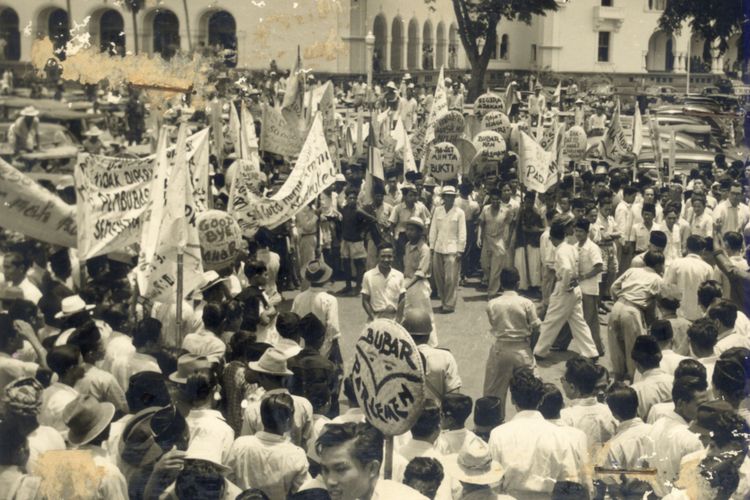
Some Army soldiers pointed their cannons at the Palace on October 17, 1952, and demanded that Sukarno dissolve parliament and replace it with a new parliament and immediately hold general elections. Sukarno only agreed to realize general elections, but rejected the proposal to dissolve parliament.
Photo source: Kompas.com
1955
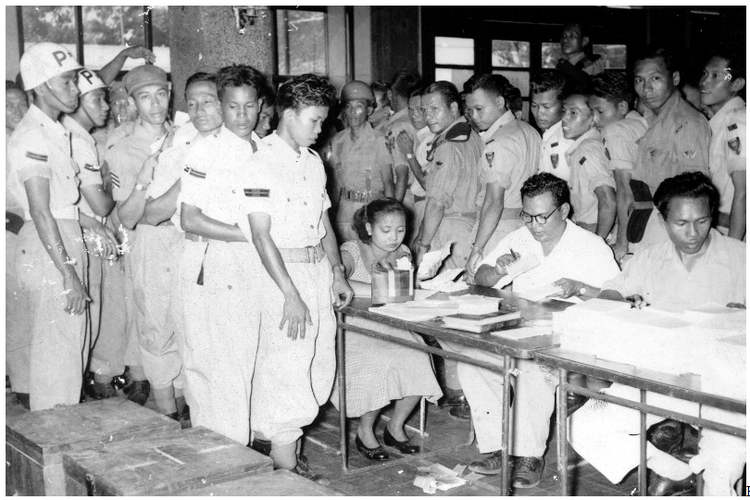
The first general election in Indonesian history was held in 1955. At that time, no political party was able to win a quarter of the total vote. The Indonesian National Party (PNI), for example, won 22.3 percent, followed by Masyumi with 20.9 percent, Nahdlatul Ulama with 18.4 percent, and PKI with 18 percent. In addition to electing members of the DPR from various political parties, the election was also held to elect members of the Constituent Assembly whose task was to formulate a Constitution in the form of a Basic Law, to replace the Provisional Constitution of 1950. In the same year, Sukarno together with Ali Sastroamidjojo initiated the Asia-Africa Conference in Bandung to strengthen the solidarity of the two continents in fighting colonialism. The conference, which was attended by leaders and delegates from 29 Asian and African countries, finally produced the Bandung Ten Principles. In it, there were 10 points, from respect for human rights to respect for international law and obligations. .
Photo source: Kompas.com
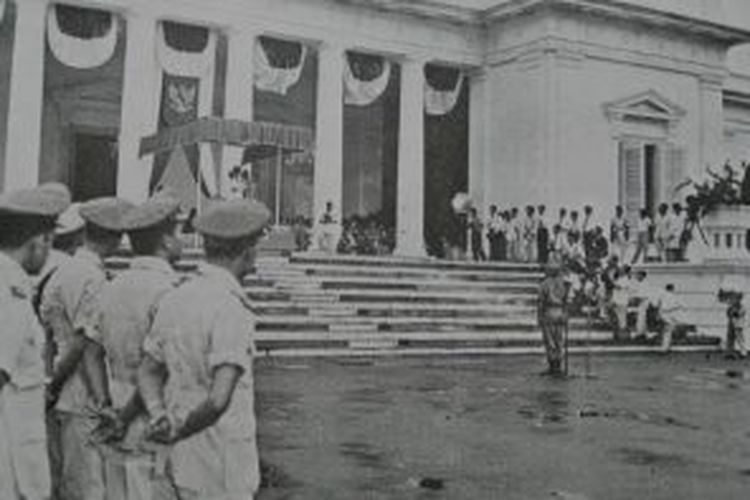
Photo source: Kompas.com
1957
On February 21, 1957, Sukarno dissolved the Parliamentary Democracy system, and replaced it with Guided Democracy. The implication was that rebellions broke out in the regions. In the midst of this situation, Sukarno then imposed the War Emergency Law. What Sukarno did did not satisfy all groups. Although it failed, several attempts to assassinate Sukarno occurred. All perpetrators of the attempted assassination were eventually sentenced to death.
Photo source: Kompas.com
1959
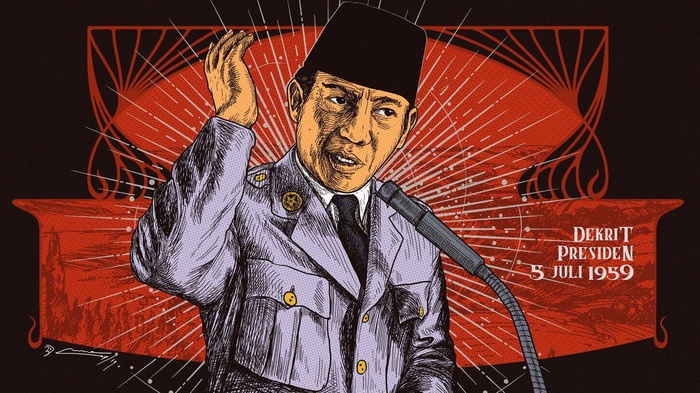
The members of the Constituent Assembly, the result of the 1955 general election, had sharp differences of opinion in determining the basis of the state, whether based on religion or not. It is not surprising that the Constituent Assembly was unable to establish a new constitution to replace the Provisional Constitution of 1950. Therefore, on July 5, 1959, Sukarno issued a Presidential Decree disbanding the Constituent Assembly. In the same year, precisely on August 17, 1959, Sukarno introduced the Political Manifesto which was confirmed by the MPRS as the GBHN.
Photo source: Tirto.id

1960
On September 30, 1960, in front of the UN General Assembly, President Sukarno criticized the UN for not being neutral in carrying out its functions. On that occasion, he outlined Pancasila, and recommended that Pancasila be included in the UN Charter. In addition, he also touched on the issue of West Irian which was being attempted to be seized from the Netherlands.
Photo source: rri.co.id

1963
Sukarno organized a sporting event for non-aligned countries called The Games of the New Emerging Forces (Ganefo) to compete with the Olympics held by Western countries, and to become a forum for cultural exchange of developing countries that had established relations since the Asia-Africa Conference. On 10–22 November 1963, Ganefo was held in Jakarta. There were 51 countries involved in the sporting event.
Photo source: Kompas Pedia

1964
Confrontation between Indonesia and Malaysia erupted in the 1960s. The dispute between the two countries began with Sukarno's rejection of Malaysia's independence. For Sukarno, the independence obtained by Malaysia was not only a gift from England, but also a British ploy to disrupt Southeast Asia. Because it did not accept this, Malaysia cut off diplomatic relations with Indonesia. Sukarno, who was very angry with Malaysia, then called for the destruction of Malaysia. A year later, because Malaysia was elected as a non-permanent member of the UN Security Council, Indonesia decided to leave the UN, and finally formed the Jakarta-Peking axis.
Photo source: Wikimedia.org
1965
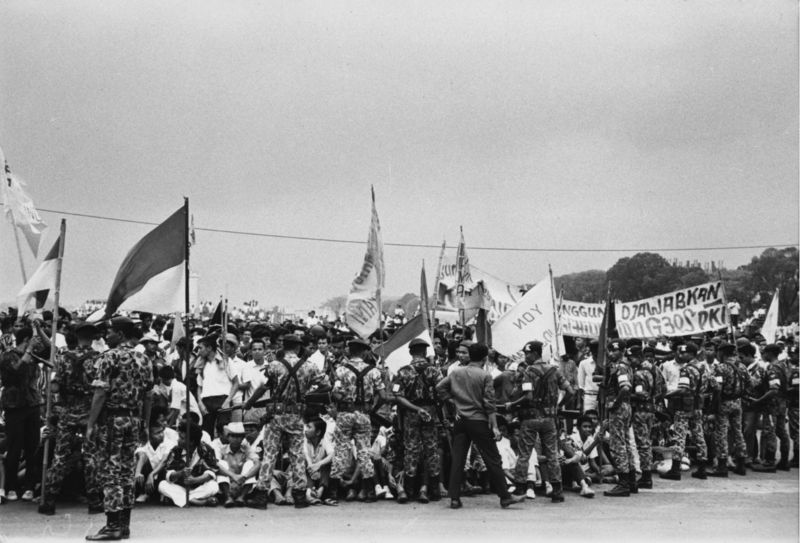
The PKI began to launch provocations with demands to arm the poor and farmers in early 1965. Although Sukarno had not responded, the Army under Ahmad Yani firmly refused. Not long after, the "Gilchrist Document" circulated, stating that there were generals in the army who wanted to seize power from Sukarno. On September 30, 1965, seven Army generals were kidnapped and then killed. The PKI, which had close ties to Sukarno, was accused of being the mastermind behind the incident.
Photo source: bbc.com
1966
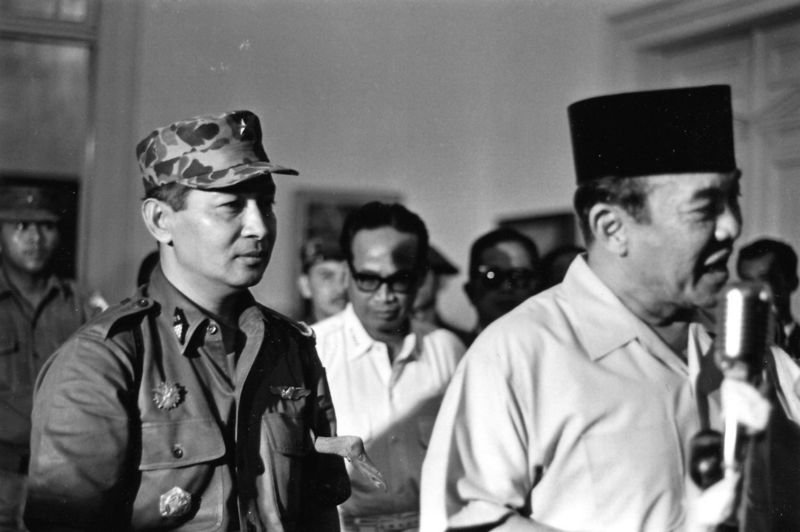
In March 1966, President Sukarno handed over power to Suharto through the March 11, 1966 Letter of Command. The letter of command became Suharto's entry point to become President of Indonesia. Although it gave rise to dualism in the government, the transfer of power had encouraged the MPR through a Special Session to appoint Suharto as Acting President in March 1967. After one year in office, Suharto was finally inaugurated by the MPR as full president.
Photo source: bbc.com
1970
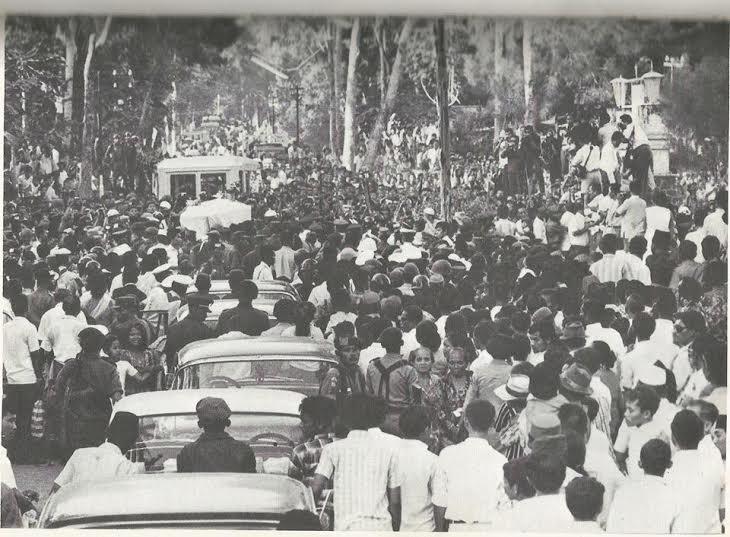
After being removed from power, Sukarno was placed under house arrest. At the same time, his health condition also declined. On June 21, 1970, Sukarno finally breathed his last. In his will, Sukarno had asked that his body be buried in Bogor. However, Suharto was reluctant to carry out the will, and preferred to bury Sukarno in Blitar, East Java.
Photo source: historia.id
 English
  Indonesian