Habibie
FATHER OF INDONESIAN DEMOCRATIZATION

1936
Bacharuddin Jusuf Habibie, often known as BJ Habibie or Habibie, was born on June 25, 1936 in Parepare, South Sulawesi. The fourth of eight children, he was the son of Alwi Abdul Jalil Habibie and RA Tuti Marini Puspowardojo. His father was an agricultural expert, and came from Gorontalo. Meanwhile, his mother was of Javanese ethnicity. From his father, Habibie got the surname "Habibie", one of the surnames in the social structure of Pohala'a (Kingdom and Family) in Gorontalo.

1951
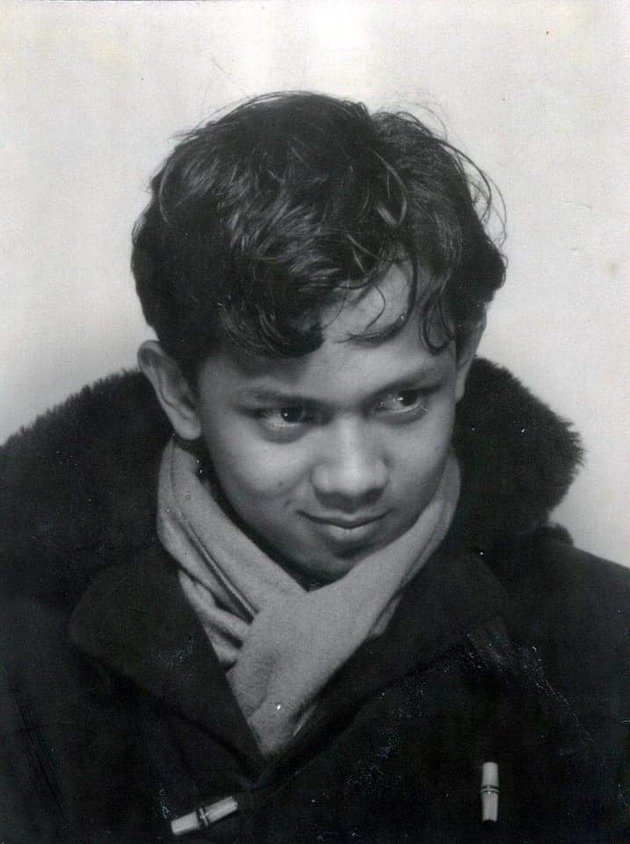
Since childhood, Habibie was called Rudy. He spent his childhood in Parepare. There, he studied at the People's School, which is now SD Negeri 4 Parepare, South Sulawesi. When he was 13 years old, precisely on September 3, 1950, his father died. Not long after that, he moved to Bandung to attend SMP 5 Bandung, and then continued his education at SMA Kristen Dago Bandung. If during junior high school Habibie did not stand out too much because he had to adjust to the teenage society in Bandung, during high school he was actually included in the category of students who mastered exact subjects. It is not surprising that he became a student who was idolized at his school. It was during junior high school that Habibie and Hasri Ainun Besar, who would later become his wife, got to know each other, although they both officially met in high school.
1954
After graduating from high school in 1954, Habibie continued his studies at the Electrical Engineering Department, Faculty of Engineering, UI, which later became ITB. Like in high school, Habibie also stood out during his college years. He had passed the PI (Propaduese-1) exam or equivalent to Sarjana Muda-1 in his first semester. However, he did not even study at ITB for a year. The trigger was when he found his high school friend and college friend, KL Laheru, preparing the requirements to continue his studies in Germany, Habibie immediately had the desire to follow in his friend's footsteps. In 1955, he finally continued his studies in Germany.
1960
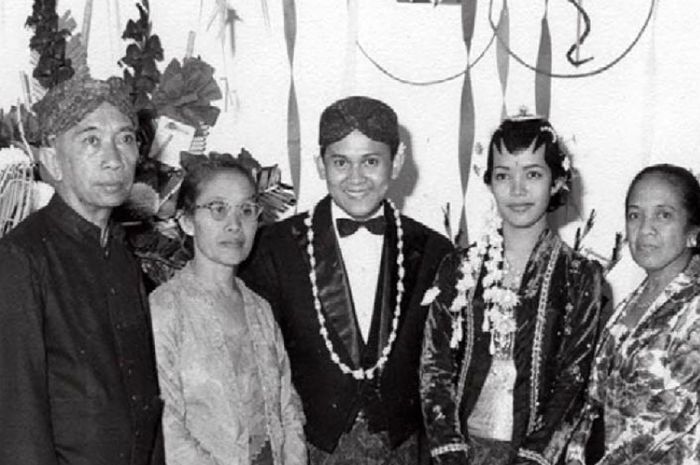
In 1960, Habibie earned a Diplom. Ing degree, and became a bachelor. His average score was impressive, namely 9.5. After receiving his bachelor's degree, he worked at the Istitut fuer Leichtbau TH Aachen as an assistant while also following a doctoral program. In 1962, he returned to Indonesia because of his mother's request to have a family. After marrying Ainun, Habibie returned to Germany, bringing his wife with him. In order to meet the needs of his family, Habibie not only worked at TH Aachen, but also at a railway factory as a construction expert. .
1965
Habibie completed his doctoral studies in 1965, with the predicate Summa Cum Laude. He was the fourth Ingenieur Doctor in the field of structures produced by universities in Germany after World War II. Most interestingly, his thesis reviewed something that had never been completed by anyone else. He calculated thermal stresses, stresses caused by heat that arise due to kinetic heating on the wings of a hypersonic aircraft at Mach B speed. In 1965, Habibie also became Head of Research and Development in Structural Analysis (1965-1969) at Hamburgger Flugzeugbau, which later changed its name to Messerschmitt Bolkow Blohm (MMB). In 1966, Habibie through his brother-in-law, Colonel Suborno, expressed his intention to return to President Suharto. However, President Suharto asked Habibie to continue his education, and would call him home later.
1978
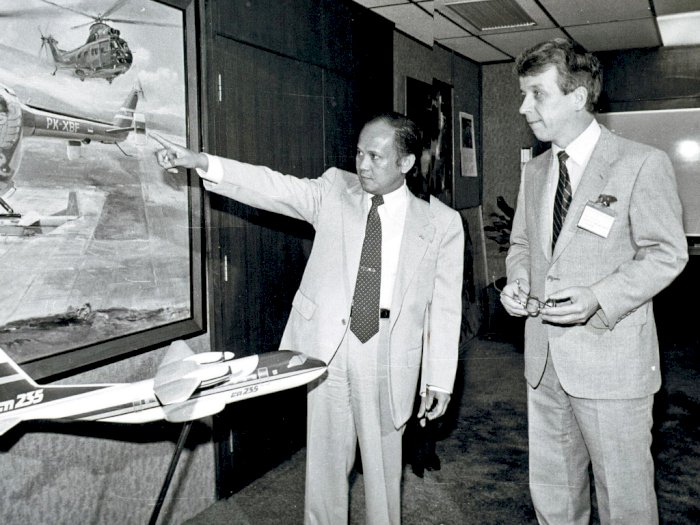
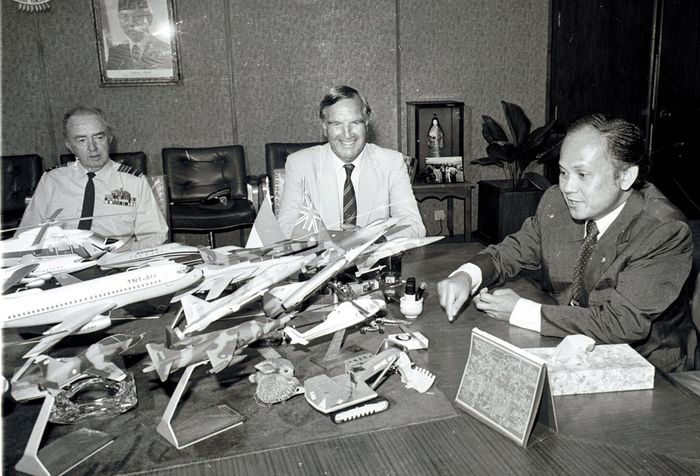
Habibie's career at Hamburgger Flugzeugbau skyrocketed. After becoming Head of the Method and Technology Division (1969-1973), then Vice President and Director of Technology at MMB (1973-1978), Habibie finally became Senior Advisor in Technology for the MMB Board of Directors (1978). This was inseparable from Habibie's performance in solving problems regarding the stability of the construction from the bottom to the tail of the aircraft. Before Habibie intervened, no one in the institution could solve the problem. Because of Habibie's success in solving these problems, Habibie was given the opportunity to design a new aircraft. With the help of a number of assistants, Habibie succeeded in designing an aircraft. One of them was the DO-31, the world's first winged aircraft capable of taking off and landing in an upright position. In 1978, Habibie entered the government, being appointed Minister of State for Research and Technology.

1990
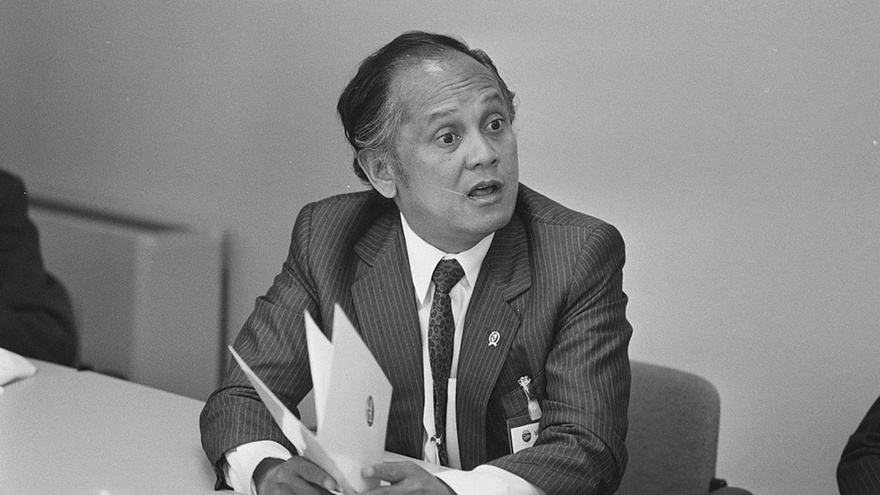
A number of students from Brawijaya University (Unibraw) asked Habibie to lead a Muslim intellectual organization at the national level. As a minister, Habibie at that time felt the need to ask permission from the president first, and had to be supported by Muslim intellectuals. After obtaining permission from the president and the support of 49 Muslim intellectuals, Habibie became the leader of the Muslim intellectual organization. He himself gave the name of the Association of Muslim Intellectuals throughout Indonesia (ICMI) to the organization.
1993
Although he had been in government since 1978, Habibie only really entered politics on January 1, 1993. At that time, he was appointed as Daily Coordinator of the Golkar Advisory Board. This position was a strategic position, because it was an extension of the Chairman of the Advisory Board, Suharto. During this period, Habibie's name emerged as a vice presidential candidate. However, Habibie emphasized that he would focus on his position as a minister. Finally, on March 17, 1993, President Suharto announced that Habibie would continue to serve as Minister of Research and Technology and Chairman of BPPT.
1998
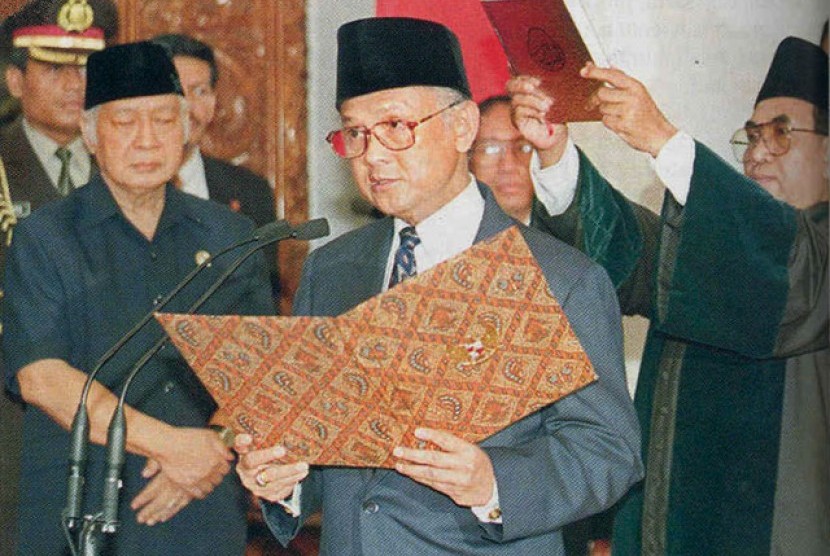
After being rumored to be vice president in 1993, Habibie actually became vice president in 1998. Habibie's rise came after Indonesia faced various problems, such as economic and political crises. The series of crises culminated in demands for President Suharto to step down from power. Unable to overcome the series of crises, Suharto resigned on May 21, 1998. The resignation meant Habibie's rise to become President of Indonesia. Therefore, Habibie's term as vice president was very short, 'only' 72 days.

1999
During Habibie's administration, several laws were recorded as having been born, and played an important role in the democratization process in Indonesia. First, Law No. 2 of 1999 concerning Political Parties. In it, there were no longer any restrictions on the number of political parties in general elections. Second, Law No. 3 of 1999 concerning General Elections. In it, general elections relate to political participation, and respect for the political rights of the people. Third, Law No. 4 of 1999 concerning the Composition and Position of the MPR, DPR, and DPRD. In this year, the first General Election since the fall of the New Order was held.
Photo source: Koransulindo.com
2019
After Ainun's death in 2010, Habibie felt a great loss. To heal his sadness, he wrote a book entitled Habibie and Ainun. Almost a decade later, on September 11, 2019, Habibie suffered heart failure, and then died following his wife. The next day, he was buried next to his wife, Hasri Ainun Besar, at the Kalibata Heroes Cemetery.
 English
  Indonesian