
The 11th MPRS Decree of 1966 mandated that the General Election should be held in 1968. However, when General Suharto was appointed as Acting President of Indonesia, he did not immediately hold an election to find a definitive leader with legitimacy from his people. Some people considered this as a step to condition Golongan Karya (Golkar) as Suharto's political machine. It was proven later that Golkar swept all victories in six editions of the Election during the New Order, which made Suharto in power as President for more than 30 years. One of the main characteristics of the New Order government was the restriction of the socio-political activities of its citizens. The dimensions of the restriction of socio-political activities were included in the realm of the Election. One of the steps taken by the New Order government was to control the relatively plural social divisions in the Old Order. Political plurality during the Old Order era had encouraged instability in the cabinet, many cabinets did not last long.
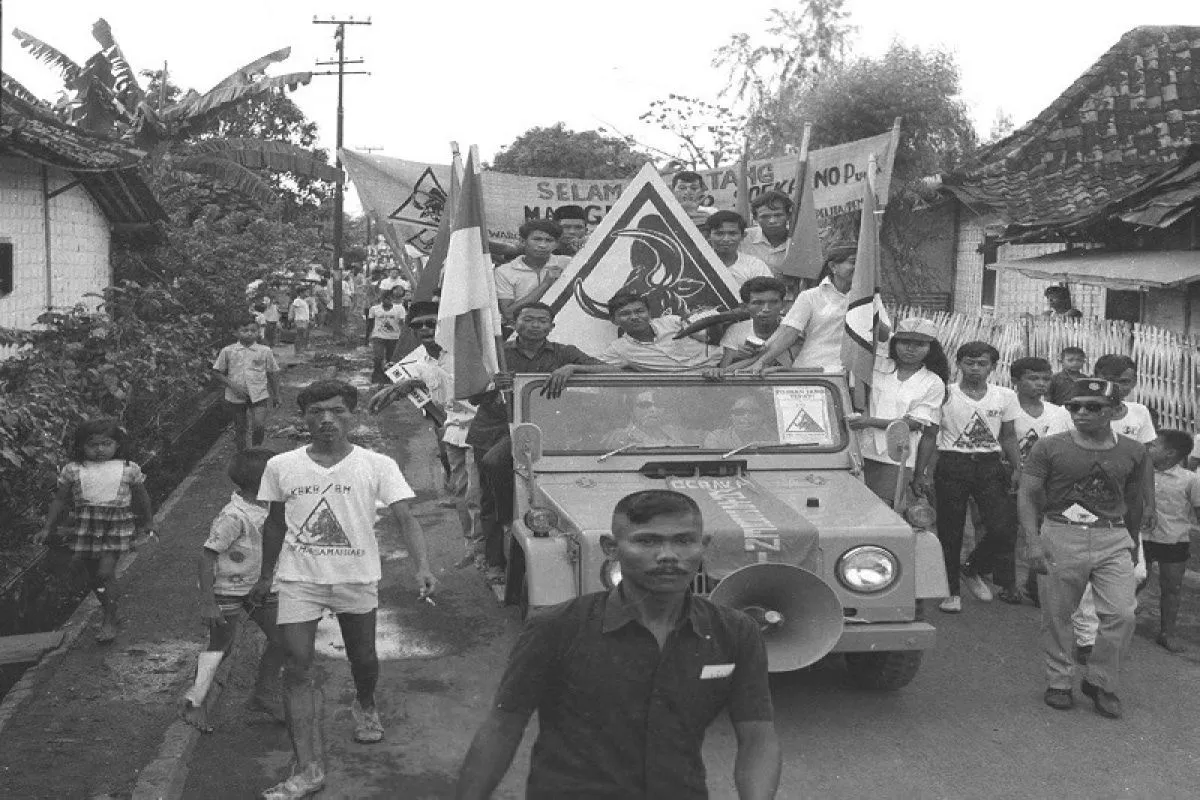
Photo 1. A number of supporters parade using attributes during the Indonesian National Party (PNI) campaign in Kemayoran Gempol, Central Jakarta, May 22, 1971. ANTARA PHOTO/IPPHOS/asf/1971. Election 1971_Antara Doc.
Source: https://aceh.antaranews.com/berita/68473/pemilu-dari-masa-ke-masa.
Technically, elections in the New Order were held to elect members of the DPR, while the President was appointed by the MPR. The system used was the same from election to election, namely proportional (balanced representation) with a closed list. Likewise with the method of calculating seats, where all seats were divided evenly in each electoral district, but by implementing a stembus accord, namely the combination of remaining votes that were not evenly divisible by the Electoral Divisor, based on the agreement of the parties participating in the election. The Stembus Accord allowed for an increase in the number of seats in an electoral district, and minimized the remaining votes that were forfeited or unused in seat conversion. On the other hand, the characteristic of DPR membership in the New Order era was the presence of appointed group representatives, with a total of 100 people in each election, most of whom came from the ABRI.
1971 Election
Three years after Suharto was appointed President through the MPR Decree in 1968, the first election of the New Order era was held. The number of election participants decreased compared to the 1955 election, namely only nine political parties and one community organization called Sekber Golkar.
Sekber Golkar, which was founded in 1964 and was a participant in the election for the first time, immediately became the winner in 1971 with 236 seats, far surpassing other more established parties such as the NU Party, PNI, and PSII. PNI, the party formed by former President Sukarno which had triumphed in the previous election, actually saw its seats in parliament plummet, from 57 to 20. Likewise with the NU Party, from 91 seats in 1955, it was reduced significantly to 58. Meanwhile, Parmusi, which was predicted to be the successor to the Masyumi Party, 'only' won 24 seats.
/https%3A%2F%2Fasset.kgnewsroom.com%2Fphoto%2Fpre%2F2023%2F12%2F15%2F28cfc125-c0a7-4657-8c70-44f140d762ab_jpg.jpg)
Photo 2. President Soeharto and Mrs. Tien heading to the polling station during the 1971 General Election, July 5, 1971Kompas/Pat Hendranto (PH). Election1971_Doc.Kompas.
Source: https://jakartatimur.kpu.go.id/pemilu-1971/
The emergence of Sekber Golkar as the winner was inseparable from the full support of military officers, as well as all civil servants who were required to vote for Golkar. At the same time, a special operation was carried out by Ali Murtopo with Suharto's blessing to create chaos in political parties, especially parties with figures who often disagreed with the government.
Table 1.
1971 Election Results
|
No. |
Party |
Voice |
Percentage |
Chair |
|
1. |
Golkar (Functional Group) |
34.348.673 |
62,82 |
236 |
|
2. |
Nahdlatul Ulama Party (NU Party) |
10.213.650 |
18,68 |
58 |
|
3. |
Indonesian National Party (PNI) |
3.793.266 |
6,93 |
20 |
|
4. |
Indonesian Muslim Party (Parmusi) |
2.930.746 |
5,36 |
24 |
|
5. |
Indonesian Islamic Syarekat Party (PSII) |
1.308.237 |
2,39 |
10 |
|
6. |
Indonesian Christian Party (Parkindo) |
733.359 |
1,34 |
7 |
|
7. |
Catholic Party |
603.740 |
1,10 |
3 |
|
8. |
Islamic Education Association (Perti) |
381.309 |
0,69 |
2 |
|
9. |
Association of Supporters of Indonesian Independence (IPKI) |
338.403 |
0,61 |
0 |
|
10 |
People's Consultative Party (Murba) |
48.126 |
0,08 |
0 |
|
|
Total |
54.669.509 |
100,00 |
360 |
Source: Tempo, 01/15/2014
1977 Election
In the second election in the New Order era, the election participants decreased again, from 10 participants in 1971 to 3 (three). This was inseparable from the merger of several political parties into two large organizations, namely the PDI and PPP. The discourse on the merger of political parties had actually begun since the late 1960s. At that time, the election participants were targeted to be 'only' followed by the Spiritualist Group, the Nationalist Group, and the Functional Group. However, because there was still rejection from Parkindo and the Catholic Party, the merger of political parties was forced to be postponed.

Photo 3. Implementation of the Election at TPS 58, Cengkareng Village, West Jakarta, May 2, 1977. Election 1977_National Library Document.
Sumber: https://opac.perpusnas.go.id/uploaded_files/sampul_koleksi/original/Bahan%20Campuran/1113823.jpg.
The merger of new political parties could only be realized in 1973. Several Islamic-based parties, such as the NU Party, PSII, Parmusi, and Perti were merged into one under the PPP. Meanwhile, the PNI, IPKI, and Murba Party merged into the PDI. Parkindo and the Catholic Party preferred to join the PDI, because the two parties were reluctant to merge with Golkar, and at the same time it was impossible to join the PPP which was clearly based on Islam.
The merger of political parties was still unable to compete with Golkar in the 1977 Election. This was because the unification of political parties did not go as easily as imagined. In the PDI camp, various suspicions arose among its constituent elements. As Stefan Eklof wrote in Power and Political Culture in Soeharto's Indonesia (2003), there was sentiment within the PDI. Parkindo and the Catholic Party saw Murba and PNI as strongly leftist. Meanwhile, the PNI saw Parkindo and the Catholic Party as disloyal groups. Then IPKI as a party formed by the military was seen as an extension of the New Order military regime to control the PDI. In such conditions, it is not surprising that the PDI only got 8.6 percent of the vote in 1977, with 29 seats in the DPR.

Photo 4. Campaign signs when the election contestants, March 22, 1977. Election 1977_Doc.National Library 2.
Sumber : https://opac.perpusnas.go.id/uploaded_files/sampul_koleksi/original/Bahan%20Campuran/1113606.jpg?rnd=180554782.
Meanwhile, the PPP is still a little more fortunate than the PDI. This is because the idea of uniting Islamic parties was actually agreed upon in the 1969 Islamic Congress. In this election, the PPP managed to win 29.2 percent of the vote, which gave it 99 seats.
Table 2.
1977 Election Results
|
No. |
Party |
Voice |
Percentage |
Chair |
|
1. |
Golkar (Functional Group) |
39.750.096 |
62,11 |
232 |
|
2. |
United Development Party (PPP) |
18.743.491 |
29,29 |
99 |
|
3. |
Indonesian Democratic Party (PDI) |
5.504.757 |
8,60 |
29 |
|
|
Total |
63.998.344 |
100,00 |
360 |
Source: Tempo, 01/15/2014
1982 Election
In this election, the Golongan Putih (Golput) movement emerged as a major issue. Regarding Golput, what distinguishes it from previous elections is that people who Golput still come to the Polling Station (TPS), but do not vote. In other words, the typical Golput has shifted, namely they are people or groups who do not use their right to vote, even encouraging and influencing others not to use their right to vote, or not to come to the TPS (Tempo Magazine, February 1, 2019, in Tangerangnews.com, 3/3/20).
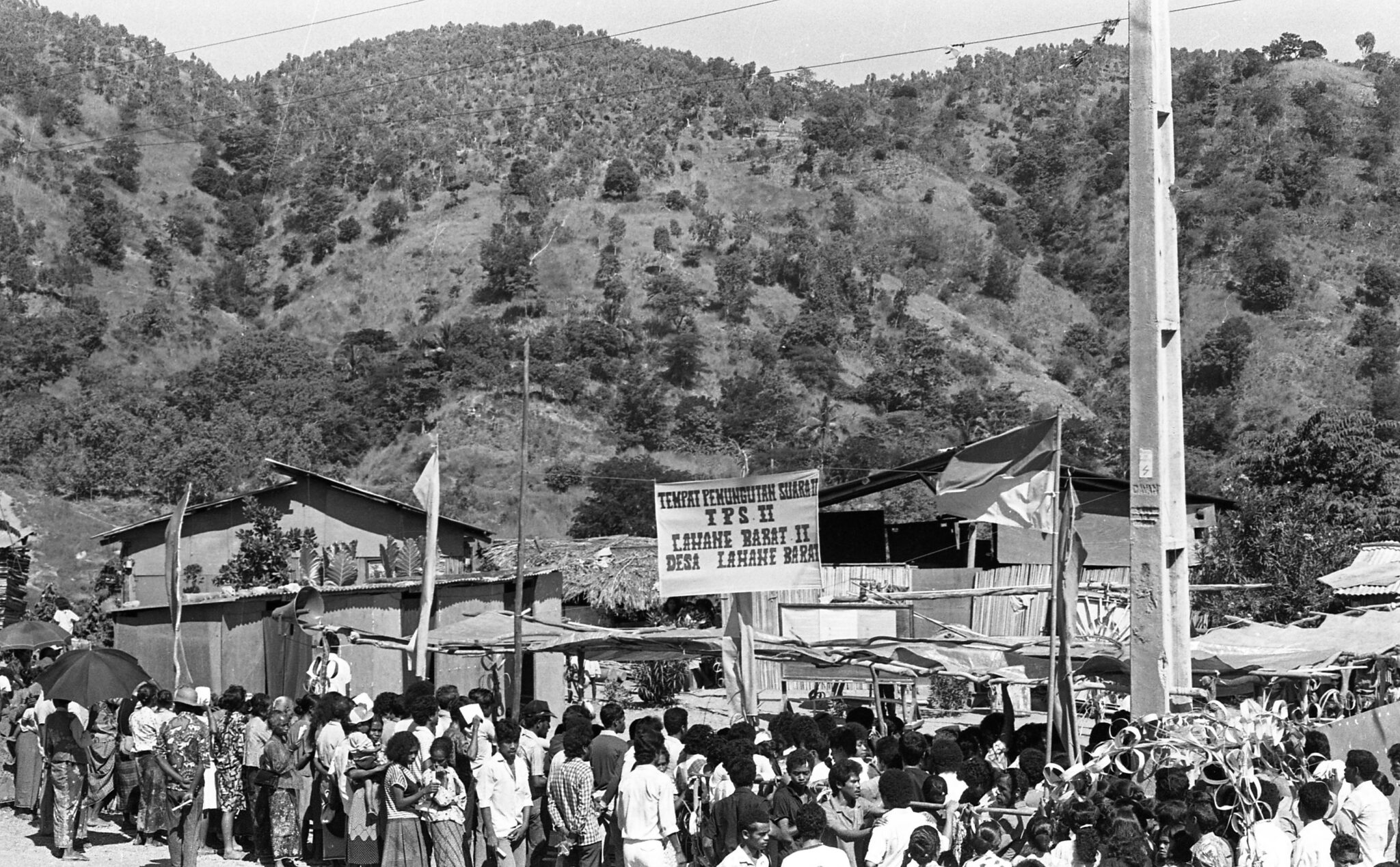
Photo 5. at one of the polling stations in Dilli, East Timor (27/4/1987)
Source: KOMPAS/JAMES LUHULIMA
This condition became a concern for the government because the rise of the white group movement was suspected of benefiting the remaining supporters of the PKI. Therefore, the government through President Soeharto then implemented a restructuring of the Election Organizing Body structure. One of the policies taken was to appoint the Minister of Justice as Chairman of the LPU (General Election Institution) Advisory Council. This step was taken to maintain Golkar's victory in the election. ABRI's involvement was also seen in its membership as part of the LPU. Although the Golput issue was getting stronger, Golkar's victory was still inevitable in the 1982 Election. Data shows that there was no significant change in voter turnout, with a fairly high figure of 96.5 percent and Golput 3.5 percent. This figure is the same as the 1977 Election, which showed a voter turnout of 96.5 percent, and a Golput figure of 3.5 percent. (Newsdetik.com, 04/13/2019).

Photo 6. The tragedy of Bloody Sunday 1982 in front of the Grand Cinema.
Source: Photo by A. Haryandoko D. (IndoCropCircles.wordpress), 1982.
Table 3.
1982 Election Results
|
No. |
Party |
Voice |
Percentage |
Amount Chair |
|
1. |
Golkar |
48.334.724 |
64,34 |
242 |
|
2. |
PPP |
20.871.880 |
27,78 |
94 |
|
3. |
PDI |
5.919.702 |
7,88 |
24 |
|
|
Total |
75.126.306 |
100,00 |
364 |
Source: Tempo, 01/15/2014 and KPU Prov. Maluku
The 1982 election was won by Golkar with 64.34 percent, followed by PPP with 27.8 percent, and 7.88 percent. This achievement made Golkar experience an increase in votes and the number of seats nationally. Nationally, Golkar managed to win an additional 10 seats, while PPP and PDI each lost 5 (five) seats. The mechanism for distributing seats in this election refers to the provisions of the 1971 election. The budget used in the 1982 election was 132 billion.
1987 Election
Before the 1987 election, the government issued a discourse to enforce Pancasila as the sole basis for all organizations and political parties in Indonesia, through the President's speech at the DPR session on August 16, 1982. The peak was the issuance of Law No. 3/1985 which required parties participating in the election to be based on Pancasila. The United Development Party was the most disadvantaged in this policy. In the 1987 election, the PPP had to abandon its Islamic identity by changing its symbol from the Kaaba to the Star.

Photo 7. Appearance of ballot papers for the election of the People's Representative Council in the 1987 General Election.
Source: Kumparan, April 10, 2019.
The data shows that Golkar again received the highest number of votes in the 1987 election. The number of seats in the DPR obtained by Golkar also increased, from the previous 242 seats (in 1982) to 299 seats (in the 1987 election). Meanwhile, the PPP lost quite a lot of seats, namely 33 seats less than in the 1982 election, so that it only received 61 seats. In addition, the PDI's vote acquisition increased from 24 seats in the 1982 election to 40 seats in the 1987 election. Meanwhile, the PDI was still at the bottom of the ranking in the 1987 election.
Photo 8. Illustration of voting for the 1987 election.
Source: KPU Document (Kompasiana, March 27, 2019).
Table 4.
1987 Election Results
|
No. |
Party |
Voice |
Percentage |
Amount Chair |
|
1. |
Golkar |
62.783.680 |
73,16 |
292 |
|
2. |
PPP |
13.701.428 |
15,97 |
61 |
|
3. |
PDI |
9.384.708 |
10,87 |
40 |
|
|
Total |
85.869.816 |
100,00 |
400 |
Source: Tirto, 04/13/19
There are several assumptions related to the increase in Golkar's votes and the decline in PPP's votes. One of them is the implementation of a structural mechanism carried out by Golkar by mobilizing networks at the local level such as utilizing teacher networks in schools. The regulation is stated in Presidential Decree No. 82/1971 concerning the establishment of the Republic of Indonesia Civil Servant Corps (Korpri) as the only forum for civil servants, which then established Korpri as one of the media part of the Golkar movement (Tirto, 05/28/19). Other regulations were also implemented, namely that parties were not allowed to form branches at the provincial level, as well as a reduction in the campaign period from the previous 45 days to 25 days, and a rule prohibiting criticism of government policies.
1992 Election
Like previous elections during the New Order, this election was still contested by three political parties, namely Golkar, PDI, and PPP. Once again, the Banyan Party emerged as the winner for the fifth consecutive time since 1971. Surprisingly, compared to previous election episodes, Golkar's votes decreased, from 73.11 percent in 1987 to 68.10 percent in 1992. Meanwhile, the votes for PPP and PDI increased. PPP, for example, won 17.01 percent compared to the previous 15.96 percent. Meanwhile, PDI received a surprising increase in votes, from 10.93 percent in 1987 to 14.89 percent in 1992.
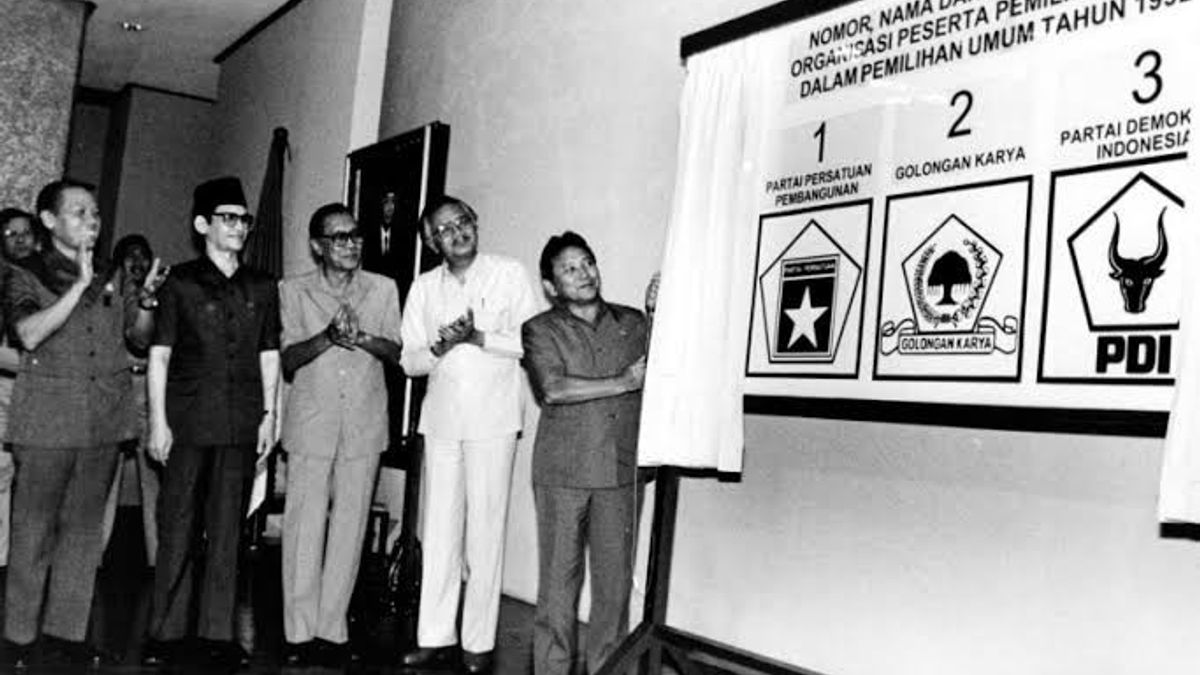
Photo 9. 1992 Election. The Chairmen of Political Parties and Golkar participating in the 1992 Election together with the Minister of Home Affairs, Rudini, and the Minister of Information, Harmoko.
Source: https://pemilu.kompas.com/pileg/popup/6.
In the Anthology of the 1992 General Election: An Evaluation, as quoted by Tirto (13/04/2019) in the History of the 1992 Election: Golkar Constrained, PPP & PDI Competing Tightly, Harry Than Silalahi explained that Golkar in this election was rocked by internal problems. As an illustration, communication did not run smoothly between the Advisory Council and the Advisory Council of Golkar branches in several provinces, such as West Kalimantan, Riau, North Sulawesi, and East Nusa Tenggara. This was one of the causes of the decline in Golkar's vote acquisition.

Photo 10. 1992 elections in Korupun Village, South Korima.
Source: https://www.flickr.com/photos/39550532@N04/4859115848/in/photolist-aVAcdZ-emtrQL-8poeRs
In addition to the lack of special attention given by Golkar to gain votes from the middle class and new voters, Harry Than Silalahi continued, the decline in votes for the Beringin Party was inseparable from the assumption that a number of activists within the party were being sidelined after the convincing victory in the 1987 election. Of these activists, the greatest disappointment came from the group of retired ABRI and village officials. In the midst of these conditions, it is not surprising that the PPP and PDI then succeeded in winning the votes of Golkar voters.
Table 5.
1992 Election Results
|
No. |
Party |
Voice |
Percentage |
Amount Chair |
|
1. |
Golkar |
66.599.331 |
68,10 |
282 |
|
2. |
PPP |
16.624.647 |
17,00 |
62 |
|
3. |
PDI |
14.565.556 |
14,89 |
56 |
|
|
Total |
97.789.534 |
100,00 |
400 |
Source: Tempo.co (01/15/2014)
1997 Election
The 1997 election was the final round of elections during the New Order era, and the end of elections that were only participated by three parties. Golkar still won the most votes with 68.10 percent, while PPP and PDI respectively won 17 percent and 14.90 percent of the votes. If we look at the acquisition of seats in the DPR, there was a significant decline experienced by PDI, from 52 seats in 1992 to 11 seats in 1997. Meanwhile, Golkar and PPP's acquisition of seats in parliament increased. Golkar, for example, rose from 282 in 1992 to 325 in 1997. Meanwhile, PPP's acquisition of seats in the DPR increased from 62 to 89.
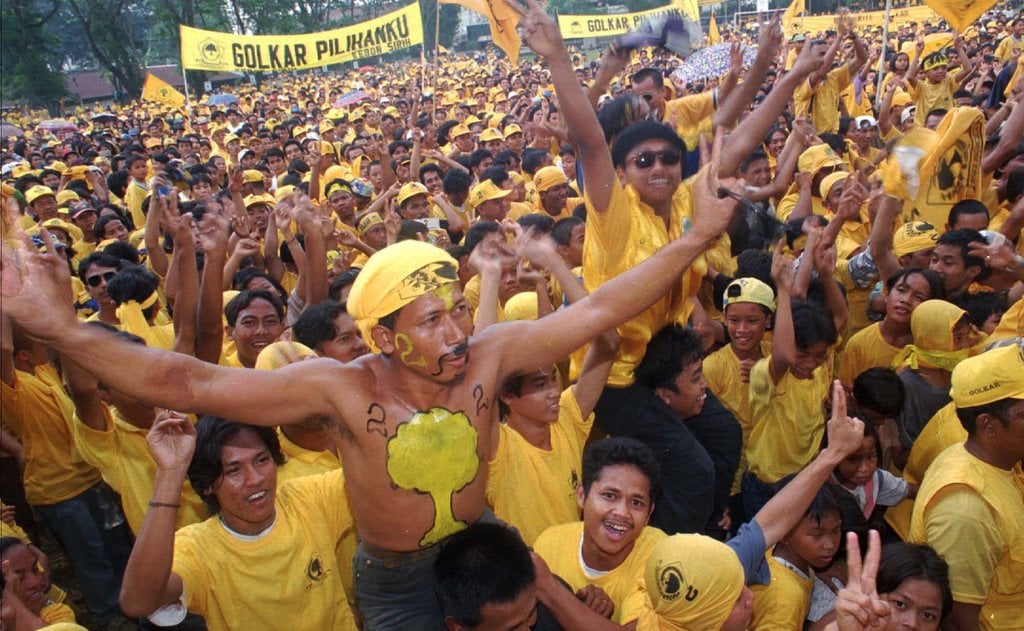
Photo 11. Golkar campaign in Central Jakarta ahead of the 1997 General Election, the last election of the New Order. AP/Muchtar Zakaria.
Source: https://tirto.id/eeaq.
The decline in PDI's vote acquisition was allegedly due to a split within PDI in 1996. In that year, the PDI management was split into two, namely Megawati Soekarnoputri's PDI version and Soerjadi's PDI version. After the PDI Congress in Medan on June 20-22, 1996, which elected Soerjadi as the General Chairperson of the PDI DPP, the government only recognized and supported Soerjadi's PDI version. It is not surprising that Soerjadi's PDI version was allowed to participate in the 1997 Election (Litbang Kompas, 2019:34-35). On the other hand, PDI voters who supported Megawati withdrew their support from PDI. Their votes are estimated to have gone to Golkar, some to PPP, and some chose not to vote (Litbang Kompas, 2019:39).
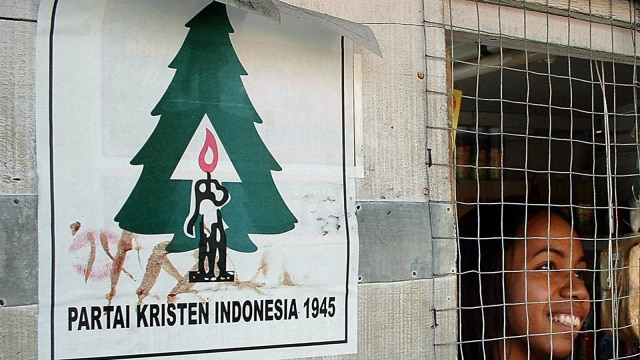
Photo 12. 1997 Election Billboard (Photo: AFP/John Macdougall).
Source: https://kumparan.com/kumparannews/christian-people-in-the-history-of-indonesian-politics-1545622279840391007/
After the election, the monetary crisis hit Indonesia. Economic problems spread to political problems. Here, dissatisfaction with the government became increasingly clear, with various protests and demands for reform. Members of the DPR, most of whom came from Golkar, were reluctant to realize these demands, and tried to perpetuate Suharto's power. The crisis and various other dynamics at that time made all efforts to maintain Suharto's power unsuccessful. One by one his supporters turned around, including a number of ministers and several reformist military figures. Facing various pressures, Suharto then resigned as President on May 20, 1998. The history of reform began.
Table 6.
Results of the 1997 Legislative Elections
|
No. |
Party |
Voice |
Percentage |
Amount Chair |
|
1. |
Golkar |
84.187.907 |
68,10 |
282 |
|
2. |
PPP |
25.340.028 |
17,00 |
62 |
|
3. |
PDI |
3.463.225 |
14,89 |
56 |
|
|
Total |
112.991.160 |
100,00 |
425 |
Source: Tempo.co (01/15/2014)
Notes
In a country that implements democracy, elections are conducted based on the principle of free and fair both in structure and process. In Indonesia, in this case during the New Order, it was far from the implementation of this principle. The result, as broadcast by the Presidential Library-National Library, was an imbalance in the contestation between election participants, and showed results that did not reflect the aspirations and sovereignty of the people.
Some of the steps taken by the government in the elections during the New Order include the following. First, the simplification of political parties, or what is known as party fusion. Second, the dominant role of active military officials in the social, political and governmental fields. The legitimacy of the military's role in various fields began with the concept of the Middle Way initiated by General AH. Nasution in 1957, which allowed military officers to participate in determining "... our state policies at high levels" (Tirto, 10/01/18). This concept was then refined by Suharto in 1982 through Law Number 20 of 1982 concerning the Dual Function of the ABRI. Third, the implementation of a single principle that requires all socio-political organizations in Indonesia to make Pancasila the basis of the organization. In the context of the election, the PPP is the party most disadvantaged by this policy. Fourth, there is a floating mass policy, where the party structure is only allowed to reach the sub-district level, which alienates the PPP and PDI from their supporting roots, and makes it difficult to mobilize support. This provision did not apply to Golkar, which at that time was not categorized as a party.
Reference
Damarjati, Danu. The Golput Phenomenon from the Old Order to the Present. (April 13, 2019). https://news.detik.com/berita/d-4509398/fenomena-golput-dari-orde-lama-hingga-kekinian.
Firdausi, Fadrik Aziz. The Record of Election Fraud in Indonesia is Held by the New Order. Presidential Library National Library.
1982 General Election. https://kepustakaanpresiden.perpusnas.go.id/election/directory/election/?box=detail&id=1&from_box=list&hlm=1&search_ruas=&search_keyword=&activation_status=.
Kompas Research and Development. 2019. The 1997 Election: The Last Election of the New Order. Jakarta: PT Kompas Gramedia.
Maluku Provincial Government. Election 1977-1997. (March 27, 2013). http://kpumalukuprov.go.id/pemilu1977-1997/.
Tempo.co. 1971 Election
Tempo.co. 1977 Election
Tempo. 1982 Election. (January 15, 2014).
Tempo. 1992 Election.
Tempo. Election 1997. < https://pemilu.tempo.co/read/545207/pemilu-1997>
Tirto, January 10, 2018, ABRI's Dual Function and the Open Path of Military Politics
Tirto, April 13 2019, History of the 1987 Election: Golkar Mighty, PPP Plummets, PDI Fair
Tirto, April 13, 2019, History of the 1992 Election: Golkar Struggles, PPP & PDI Compete Tightly.
Tirto, 24 April 2019, History of the 1997 Election: Failed Attempt to Perpetuate Soeharto's Power
Zulfikar. The Formation of the Election Supervisory Committee in 1982. (March 3, 2020). http://tangerangnews.com/opini/read/30375/TERBENTUKNYA-PANWASLAK-PEMILU-TAHUN-1982.
 English
  Indonesian