
PRESIDENT OF INDONESIA
From Soekarno (1945) to Joko Widodo (2014-2024)

SOEKARNO (1945 - 1967)
The day after Sukarno read out the text of the proclamation at Jalan Pegangsaan Timur Number 56 Central Jakarta, the Preparatory Committee for Indonesian Independence (PPKI) appointed the Son of the Dawn as president, and Muhammad Hatta as vice president. In other words, Soekarno and Hatta were not directly elected by the people through general elections (Pemilu) as in the current reform era. In the early days of independence, as mandated by the 1945 Constitution, Indonesia implemented a presidential system. The logical consequence is that the president acts as head of state and head of government. George Kahin (1995: 190) in Reflections on the Struggle of the Birth of the Republic: Nationalism and Revolution in Indonesia states that Soekarno, Hatta, Amir Sjarifuddin, and Ir. Surachman formed the first government cabinet in the country's history on September 2, 1945.

SOEHARTO (1967 - 1998)
In March 1966, President Soekarno handed over power to Suharto through a March 11, 1966 Order. The warrant became Suharto's entry point to become President of Indonesia. Even though it gave rise to dualism in the government, this delegation of power had pushed the MPR through a Special Session to appoint Suharto as Acting President in March 1967. After one year, Suharto was finally appointed by the MPR to become full president (Litbang Kzompas, 2020:v). With the rise of Soeharto as president, Indonesia also entered a new chapter called the New Order—the term New Order was coined by Suharto to cut off his power from Soekarno's. The main capital of Suharto's power was the support of the army and the people's anger at the Indonesian Communist Party (PKI). After "cleaning up" Soekarno, Suharto took three ways to build and maintain his power. First, get rid of left-oriented and Soekarnoist officers. Second, promoting generals who don't have the potential to use the army against the president. Third, people who supported Soekarno and were prominent in society were removed from influential positions (Said, 2016:10). The tip of the explanation was the eviction of people who could threaten Suharto's power. During 32 years in power, practices like that could be strengthened by the New Order to maintain power.

BAHARUDIN JUSUF HABIBIE(1998 - 1999)
In the Credential Room at the State Palace, on Thursday 21 May 1998, Indonesia and the international community not only witnessed Suharto's resignation from the presidency, but also witnessed the appointment of Vice President BJ Habibie as President of Indonesia. The appointment was based on TAP MPR No. VII/MPR/1973, which reads: "if the President is absent, then the Vice President is appointed as President." After taking the oath of office, Habibie was well aware that the economic crisis and chaos in society could tear Indonesia apart. In Decisive Moments: Indonesia's Long Road Towards Democracy, Habibie (2006:92) states: "Wouldn't all of this...could trigger a split or "Balkanization" of the Unitary State of the Republic of Indonesia which was proclaimed in 1945? Couldn't civil war occur? " In a matter of weeks since ascending to the presidency, Habibie showed his commitment to human rights (HAM), by freeing political prisoners, namely separatists and old figures from the former PKI. This action was followed by the release of student activists, the granting of amnesty to those detained after the 1984 Tanjung Priok incident, and the recognition of Mohammad Natsir as the nation's leader—a manifestation of the government's forgiveness of the PRRI rebellion (Ricklefs, 2007:665). In addition, Habibie put an end to the strict control of the press by the New Order government. During Habibie's time, new print media emerged. For Habibie (2006:114-115), freedom of the press is "a vehicle for channeling freedom of expression... one of the important pillars of democracy." To this day, the freedom of the press that was opened by Habibie still survives, and is the foundation of democracy.

ABDURRAHMAN WAHID (1999 - 2001)
Abdurrahman Wahid, or who is familiarly called Gus Dur, was born in Jombang on September 7, 1940. Born with the name Abdurrahman Adakhil, he was the son of KH. Abdul Wahid Hasyim, former Minister of Religion of the Republic of Indonesia from 1949 - 1953, as well as grandson of KH. Hasyim Asy'ari, founder of the Nahdlatul Ulama Islamic Boarding School. His involvement in politics began in 1982 when he participated in campaigning for the United Development Party in the elections that year. His name became increasingly the talk of the town when he was elected chairman of the NU board of directors as a result of the 1984 congress. The congress also decided that NU would withdraw from practical political activities, including its membership as a PPP forming element. In the next election in 1987 Gus Dur became a member of the MPR RI, but not from PPP but from Golkar. In that election, Gus Dur and several NU figures actively campaigned that voting for or supporting other than PPP in elections was not something that was unlawful for Muslims.

Megawati Soekarnoputri (2001 - 2004)
Dyah Permata Megawati Setyawati Soekarnoputri or more commonly called Megawati Soekarnopoetri is the second child of former President Soekarno and Fatmawati. His involvement in politics began in 1986 when he became deputy chairman of the Jakarta branch of the PDI. The existence of Soekarno's race in the party had a fairly good influence because the number of PDI seats increased, from 24 in the 1982 election, to 40 in the 1987 election. PDI at the Extraordinary Congress in Surabaya in 1993. Slowly but surely it gathered its supporters and loyalists in politics.

SUSILO BAMBANG YUDHOYONO (2004 - 2014)
The 2004 general election was a historic milestone for Indonesia, because for the first time the Indonesian people could directly vote for the candidate they wanted, either electing members of parliament, as well as the President and Vice President. With a total of 153 million voters, Indonesia is the largest democracy, along with the United States and India. Some circles were pessimistic that the direct leadership succession would be marred by riots. This concern was not without reason considering that at that time political euphoria was high. Several years earlier, when President Gus Dur was impeached, there had been tension between his support group and other groups that wanted a presidential replacement. But in fact the election can take place in an orderly manner.
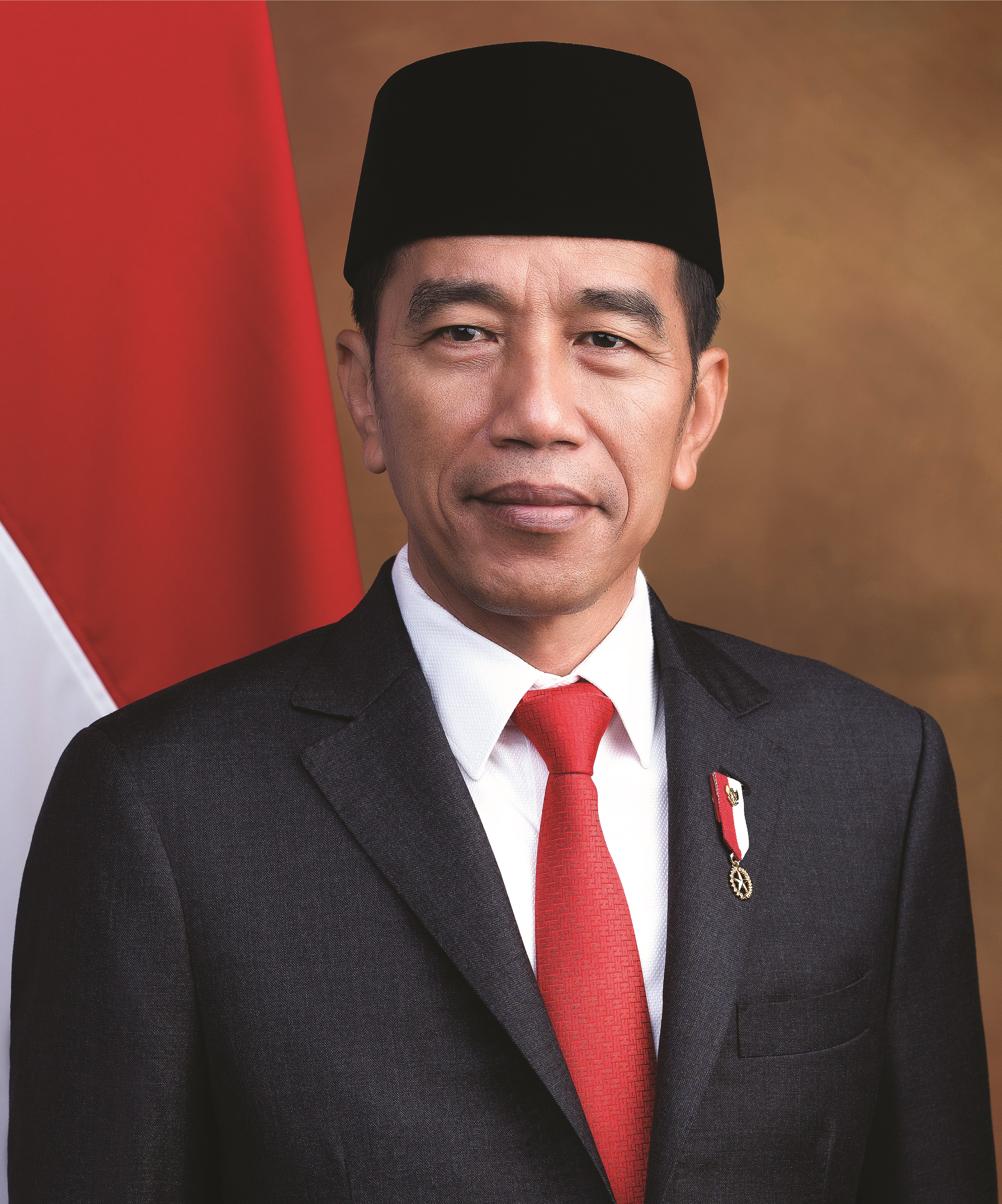
JOKO WIDODO (2014 - 2024)
The name Joko Widodo, or who is usually called Jokowi, became a topic of conversation when he served as Mayor of Surakarta, especially when he was elected for his second term. He managed to win again with a vote of 90.09 percent. Jokowi was increasingly recognized by many people when he was nominated by the PDIP to become the Governor of DKI Jakarta in 2012, paired with Basuki Tjahaja Purnama, who at that time was a Gerindra cadre. In 2014 Jokowi paired with Jusuf Kalla won the presidential election beating Prabowo Subianto and Hatta Radjasa. In the next presidential election, paired with KH Ma'aruf Amin, Jokowi won another victory for the supremacy of the national leader after defeating the Prabowo Subianto-Sandiaga Shalahuddin Uno pair. During his tenure as head of government at the mayor, governor and president levels, Jokowi was famous for his habit of making blusukans to various places to see firsthand what was happening in the daily lives of the Indonesian people. In his first term as President of the Republic of Indonesia, Jokowi introduced the concept of "Indonesia-centric" as the antithesis of an approach that tends to be "Java-centric" and even "Jakarta-centric" in national economic development.
 English
  Indonesian